
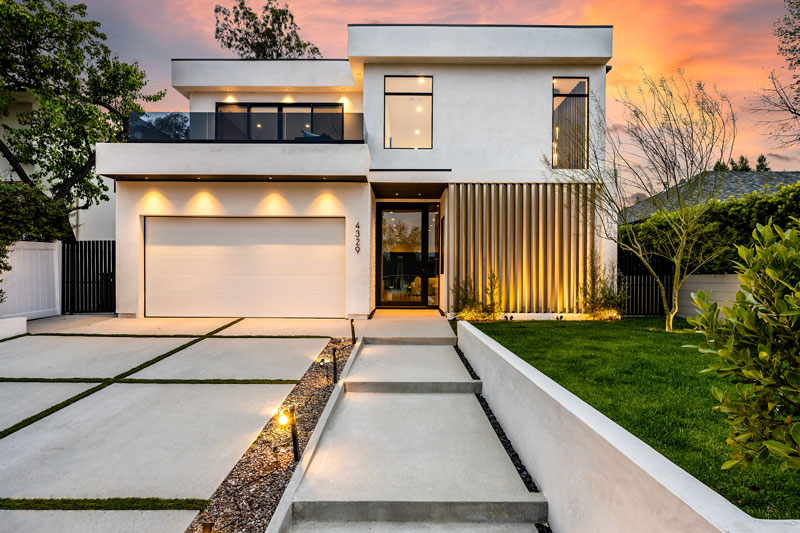
Outdoor Lighting Denver: Pool and Spa Perimeter Lighting
Pool and spa edges can be dramatic after dark, but only if the light is doing more than shining at the water. Good perimeter lighting shapes how people move, keeps splashes and steps readable, and preserves the night sky on clear Colorado evenings. In Denver, the recipe has a few extra ingredients, from altitude and UV to freeze cycles and snowmelt salts. What follows comes from years of walking clients’ backyards with a flashlight and a notepad, then coming back in January to see what actually held up.
What perimeter lighting really does
People often ask for a glow on the water. That is the last step. First, the hardscape and the grade around the pool must read like a simple map. Edges, transitions, and vertical surfaces do the work. When the coping is legible and the path to the spa is obvious, the water takes care of itself, picking up reflections and movement.
Perimeter lighting for a pool or spa usually has four jobs. It draws a safe line at the water, allows you to navigate to and from the house without guesswork, establishes a mood that suits the way you actually use the space, and respects neighboring properties. With the right balance, you get all four at once.
Denver light, weather, and water
Denver sits around 5,280 feet. That elevation makes midday sun feel harsh and colors crisp, and it does the same to artificial light. A bare LED that seems fine at sea level can look glary here. UV exposure shortens the life of cheap plastics. Snow, freeze-thaw, and the chlorinated microclimate around a spa add to the stress.
I treat denver outdoor lighting here like mountain lighting. Fixtures and wiring see large temperature swings in a single day. Condensation forms inside housings then freezes. Snowmelt salts get kicked around patios. The result, if you take shortcuts, is clouded lenses, corroded set screws, and intermittent connections by year two. There is a reason quality colorado outdoor lighting systems use solid brass, 316 stainless, or thick, powder-coated aluminum with UV-stable gasketry. You will also notice that lenses and louvers matter more than lumens because your eyes are dark adapted.
Safety and code around water
Everyone gravitates to ambiance, but the National Electrical Code sets boundaries that matter more. Article 680 governs pools and spas, and local amendments in Denver and surrounding municipalities sometimes tighten it. The themes are consistent.
- Bonding is nonnegotiable. Metal within the pool zone, including certain fixtures, rails, and even rebar in a poured deck, ties into an equipotential bonding grid to eliminate stray voltage differences.
- GFCI protection is standard. Circuits that serve pool and spa lighting and outlets in the vicinity need ground-fault protection sized and listed for the equipment.
- Setbacks keep luminaires and receptacles at safe distances. The exact numbers vary by fixture type and listing, and they change across code cycles. Low-voltage, listed-for-wet-location luminaires can be closer than line-voltage gear, but you still respect horizontal setbacks from the water line and vertical clearances over it.
I do not hang fixtures over the water. Light over a pool can be dazzling, and even if code allows certain listed gear, it creates glare and cleaning headaches. For denver outdoor lighting around pools, respectful placement just outside the coping with full shielding gives plenty of light without asking anyone to swim under a bulb.
If you are in Denver proper, expect to pull an electrical permit for new circuits, transformers, or controls. An inspection verifies GFCI, bonding, burial depth, and listing. It is normal to coordinate between the landscape contractor and a licensed electrician. For exterior lighting denver projects in tight urban lots, inspectors also look at clearances to property lines and setbacks for structures.
Design moves that work at the water’s edge
Perimeter light needs to read as a soft edge, not a line of dots. Direct sources into the eye spoil the night and flatten the water. Work with surfaces.
A favorite move on modern pools is a continuous undercap light tucked below the coping on the dry side. When you backlight the inside face of a stone or concrete seat wall, you get a low ribbon that grazes the vertical face. It paints texture and marks the edge without revealing the source. On classic or organic pools where a continuous strip feels out of place, small steplights with deep louvers every six to eight feet accomplish the same job. The louvers hide the diode from seated eye lines and still light shoes and coping.
For spas, boost the verticals that frame the entry. Two discreet recessed lights in the risers of adjacent steps will do more for safety than a dozen pathway Braga Outdoor Lighting hats scattered around. Where a spa overflows to a runnel or catch basin, a slim linear grazing light under the lip defines movement and reads like a gentle line in photographs without the glare of an exposed point source.
The rest is choreography. Uplight one or two trees on the far side of the pool to give the eye a destination. Light a portion of the fence or a masonry panel with a soft wash so there is a mid-distance anchor. Keep denver garden lighting near planting beds low and warm. The water picks up these vertical accents and comes alive on its own.
Choosing fixtures and materials that last in Denver
I have replaced far too many bargain fixtures that went chalky or brittle within two winters. Denver’s high UV eats plastics that are not certified UV-stable. Salt and freeze-thaw work on poorly plated fasteners. If you want denver lighting solutions that hold up, consider the following:
- Housing and hardware: Solid cast brass ages well around chlorinated water and snow. 316 stainless offers excellent corrosion resistance, especially where snowmelt salts are used. Marine-grade powder-coated aluminum works if the coating quality is first rate and hardware is stainless.
- Optics and shielding: Deeply recessed light sources with field-changeable lenses help fine-tune glare control. I favor fixtures with clip-in louver and eyebrow options so I can adapt after the first night aiming session.
- Seals and ratings: Look for IP65 or IP67 on fixtures near splash and snow. UL listed for wet location is the baseline. Linear lights used under caps should have fully potted connections, not just heat-shrink.
- Mounting strategy: In freeze-thaw, anything wedged into a mortar joint tends to crack it by year three. I preplan stainless brackets or continuous channels during the build, or I drill and anchor with appropriate epoxy and tapcons where the structure can take it.
Denver outdoor fixtures should also factor maintenance. When a spa is steaming in January, the last thing anyone wants is to remove a dozen tiny screws to replace a module. Tool-less lens access or a serviceable driver compartment can save an evening.
Color temperature, brightness, and mood
Defaulting to cool white is a common mistake. Around water, cool light reflects as hard sparkle and raises contrast. Warm white in the 2700 to 3000 Kelvin range creates a welcoming edge and flatters skin tones. For task areas like a grilling alcove or steps from the house down to the pool terrace, a slightly cooler 3000 to 3500 Kelvin can help with crispness without tipping into blue.
Brightness is a relative perception. A 2 to 3 watt LED louvered steplight placed properly can do more useful work than a 10 watt spot sprayed across a patio. I rarely exceed 50 to 75 delivered lumens per linear foot for undercap runs at the water, and I often dim lower. For uplighting vertical accents beyond the pool, 3 to 6 watt LEDs with narrow to medium beams keep planting alive without blasting the scene.
High CRI helps materials read true. Flagstone, redwood, and native grasses change with light quality. If you can spec 90+ CRI near seating and dining, do it. The cost difference has come down, and the effect on food and skin is real.
Color-changing light belongs in moderation. A spa can take a subtle RGBW under-lip effect for special nights, especially if you keep the rest of the scene warm and steady. Full DMX shows belong at hotels, not in small backyards with neighbors ten feet away. When a client insists, I set up scenes that cap saturation and automatically revert to a warm white base at a set hour.
Controls and daily use
Denver enjoys 300 days of sunshine, give or take, so astronomical timers make sense. Set on and off by latitude and date so there is no fiddling as days change. Layer in zones, not just on and off. The pool edge, the path to the house, the plantings beyond, and any color accent should each dim independently. That way, you can run a safe edge at 40 percent after bedtime while shutting down the uplights to reduce sky glow.
Smart controls work well when they are robust. Wi-Fi in a masonry yard can be spotty. I like hardwired low-voltage dimmers and relays for the perimeter zones, with a bridge to a whole-house system if desired. When you do go app-based, choose platforms that support sunrise and weather logic. A slight dim during heavy snow increases contrast and reduces glare off the blanket.
Motion sensors at a pool are a mixed bag. Animals set them off, and sudden bright-on can be unsafe for dark-adapted eyes. If you use them, keep the ramp gentle and the max level low.
Power, wiring, and the parts you do not see
Most denver landscape lighting around pools runs on low voltage. A remote transformer steps 120 volts to 12 to 15 volts. Multi-tap transformers help account for voltage drop across long runs or heavier loads. Here are the practices that avoid callbacks:
- Use heavier gauge cable than you think. 10 or 12 AWG main runs keep voltage consistent, especially when you dim. Tap smaller branches with 12 to 14 AWG.
- Plan for loops, not long daisy chains. Feed from both ends of a run to equalize voltage, then fine-tune with taps at the transformer.
- Respect burial depths. Local practice for low-voltage landscape cable is typically 6 inches, but verify with your inspector. Where cables cross walkways or drive areas, run in PVC conduit for protection.
- Protect splices. Gel-filled, listed connectors are mandatory near irrigation and splash. I do not bury standard wire nuts in landscape beds around pools. Crimp, gel, and heat-shrink if the joint will be inaccessible.
In Denver’s freeze-thaw, run conduits with room to move. Expansion fittings where PVC meets masonry prevent stress. Where conduits surface at equipment pads, keep them high enough to avoid snowpack and splash, and label zones so maintenance is not a guessing game a year later.
Working with the landscape: pathways, planting, and neighbors
Denver pathway lighting around a pool area works best when it reads as invitation, not runway. Shielded path lights that graze the ground and catch the texture of decomposed granite or pavers make the route legible without pulling attention. Keep spacing irregular where the path meanders, closer at tight turns or grade changes.
Planting changes the light across seasons. Ornamental grasses take light beautifully from behind, but in winter their cut stubble can reflect more harshly. Evergreen backdrops are your friend, giving a reference plane for soft wall-grazing. In small yards, I often light one fence bay with a long ellipse to make the space feel deeper and leave the rest dark so stars and the city glow take over.
Respecting neighbors is part of denver outdoor illumination. Shield sources fully, use lower color temperature, and limit height. If you want a taller beacon, a slender bollard with a dark optic aimed only at the path can work, but keep it well back from the coping to avoid splash and reflection.
Materials and finishes that resist Denver’s climate
Brass and 316 stainless age gracefully. They also accept maintenance. If a set screw freezes, you can extract it. Powder-coated aluminum demands quality. Look for a thick, even finish and avoid fixtures with mixed metals that invite galvanic corrosion. For fasteners, insist on stainless. For linear systems near salt or chlorinated splash, silicone-jacketed products with fully potted ends beat snap-on covers.
Snowmelt salts are brutal. If your patio uses a deicer, rinse fixtures in spring. Choose lenses with glass, not acrylic, near heavy salt use. Acrylic crazes and fogs faster at altitude.
Budgets and phasing that make sense
Clients often ask what denver outdoor lighting systems denver residents typically invest around a pool. Ranges help. For a modest backyard pool with a spa, a well-executed perimeter and path package with quality fixtures, transformer, controls, and professional install usually runs from the mid four figures to the low five figures. Add tree lighting, wall grazing, and smart controls, and you may land in the mid teens. Large lots or complex hardscape with many linear details can climb from there.
Phasing works. Run conduit and leave pull strings during hardscape construction. Install a transformer pad and a primary run even if you do not place every fixture yet. Good structure in phase one beats retrofits later when masonry is set.
Maintenance: keep it beautiful through the seasons
Here is a simple annual rhythm that works well for landscape lighting denver projects around water.
- Early spring: Rinse fixtures to remove salts and grime. Check lens seals. Trim planting to keep optics clear. Confirm GFCI test passes.
- Early summer: Aim gently after trees leaf out. Rebalance dimming if nights feel too bright. Fasten any loosened brackets after winter movement.
- Fall: Clean lenses before early sunsets. Cut grasses with light in mind, leaving enough material to catch a backlight if that is part of the look.
- First snow: Observe glare off snow. Drop output slightly on undercap runs if the patio reads too bright. Verify that fixtures clear typical snow depth.
- Midwinter: Quick check of spa zone after temperature swings. Look for condensation inside housings and replace gaskets if needed.
A practical planning checklist
If you are about to start an outdoor lighting installations denver project at a pool or spa, keep these five checkpoints handy.
- Map zones by function, not fixture type. Edge safety, primary paths, vertical accents, and optional color should be independent.
- Choose materials for UV and corrosion, not only for looks. Solid brass, 316 stainless, or proven powder coat with stainless hardware.
- Commit to shielding. Every source near the water should hide the diode from a seated or swimming eye.
- Size power and wiring for growth. Multi-tap transformer, heavier gauge cable, spare capacity for a new tree or a future bench light.
- Lock in controls that fit your routine. Astronomical timer, simple dimming per zone, and a scene that keeps an after-hours glow without the full show.
When to DIY and when to hire in Denver
Placing a few path lights along a garden bed is one thing. Lighting at the edge of water, tied into bonding and GFCI requirements, is another. If your project touches new circuits, integrates with pool equipment, or pushes luminaires close to the coping, it is wise to bring in a licensed electrician familiar with Article 680 and local inspections. A seasoned landscape lighting contractor adds the aiming and shielding judgement that keeps glare out of eyes and photos, and keeps neighbors happy.
For smaller adjustments, homeowners can handle re-aiming uplights after leaf-out, cleaning lenses, and basic dimming tweaks. Be cautious with linear systems. A seemingly simple splice can wick water and fail when freeze returns.
Two quick case notes
A Wash Park remodel had a narrow side yard connecting the house to a backyard pool. The client wanted the pool to glow, but the side path was the daily issue. We added two undercap runs, one along the pool’s inside bench wall and one under a low seat wall flanking the side path. Both runs were tuned to 2800 Kelvin and capped at 40 percent after 10 pm by astronomical schedule. Instead of any fixtures facing the water, we uplighted a single honeylocust beyond the far edge and grazed a cedar fence bay. The water took on quiet movement, the path felt like a gentle run from house to spa, and there was no neighbor glare. The fixtures were cast brass with glass lenses, mounted on stainless tracks set during masonry. Two winters in, no corrosion and zero callbacks beyond a spring rinse.
North of Denver, a client with a salt-chlorine generator and heavy snowmelt use struggled with corroded fasteners and clouded lenses from a previous install. We swapped acrylic lenses for glass, changed mixed-metal path fixtures to 316 stainless with deep louvers, and moved two bright bollards further from the coping. Wiring was upsized to 10 AWG on the main loop to eliminate dimming discrepancies. A small RGBW strip under the spa lip remained, but the default scene set it to a warm white and capped saturation for special nights. The yard now reads calm, and the maintenance list each spring is rinse, trim, aim.
Where the bigger picture fits
Pools and spas anchor many outdoor spaces in the region. Denver’s clear air and brilliant nights reward restraint. The best outdoor lighting denver projects I have seen make the water feel part of a larger night, not the whole show. When you light verticals just beyond the edge, give the coping a soft readable line, and keep fixtures quiet, people relax. They see faces, not sources. They hear the water, not the hum of a transformer or the thrum of a driver working too hard.
If you are comparing providers for outdoor lighting services denver wide, look closely at materials, shielding, and how a designer talks about aiming. Ask to see work after dark. Bring up frost depth and burial, glare management, and how they coordinate with pool electricians. An outfit that treats denver exterior lighting as a technical craft, not just decoration, will talk fluently about GFCI, bonding, and how to build lighting into masonry during construction.
A note on scope and neighbors
Not every backyard can carry a big lighting system. Smaller lots benefit from tighter, warmer scenes. Often, three or four moves do it. A shielded undercap along the coping, two step lights on the spa side, one or two tree uplights as a destination, and a single wash on a fence bay. That sums to a dozen watts, not a hundred. Light less, light better.
The same restraint helps with dark-sky goals. Denver’s broader effort to reduce sky glow starts in backyards. Use 2700 to 3000 Kelvin near water. Keep outputs low. Aim only where people need to move. Shut off accents by a set time with outdoor lighting solutions denver smart controls. Your yard still looks beautiful at 11 pm, and your neighbor sleeps better.
Bringing it all together
Pool and spa perimeter lighting is as much about what you do not light as what you do. In Denver, the climate pushes you toward better materials, better sealing, and more conservative aiming. The physics of water and night vision reward warm light and vertical surfaces. Codes nudge you away from casual DIY near the coping, which is a good thing.
When the plan respects these realities, the rest falls into place. You walk from kitchen to spa without a thought. The edge reads softly, not as a border but as a welcome. The water moves, catching hints of tree and fence. The gear disappears. That is denver’s outdoor lighting at its best: practical, durable, and quiet enough to let the evening do the talking.
Braga Outdoor Lighting
18172 E Arizona Ave UNIT B, Aurora, CO 80017
1.888.638.8937
https://bragaoutdoorlighting.com/