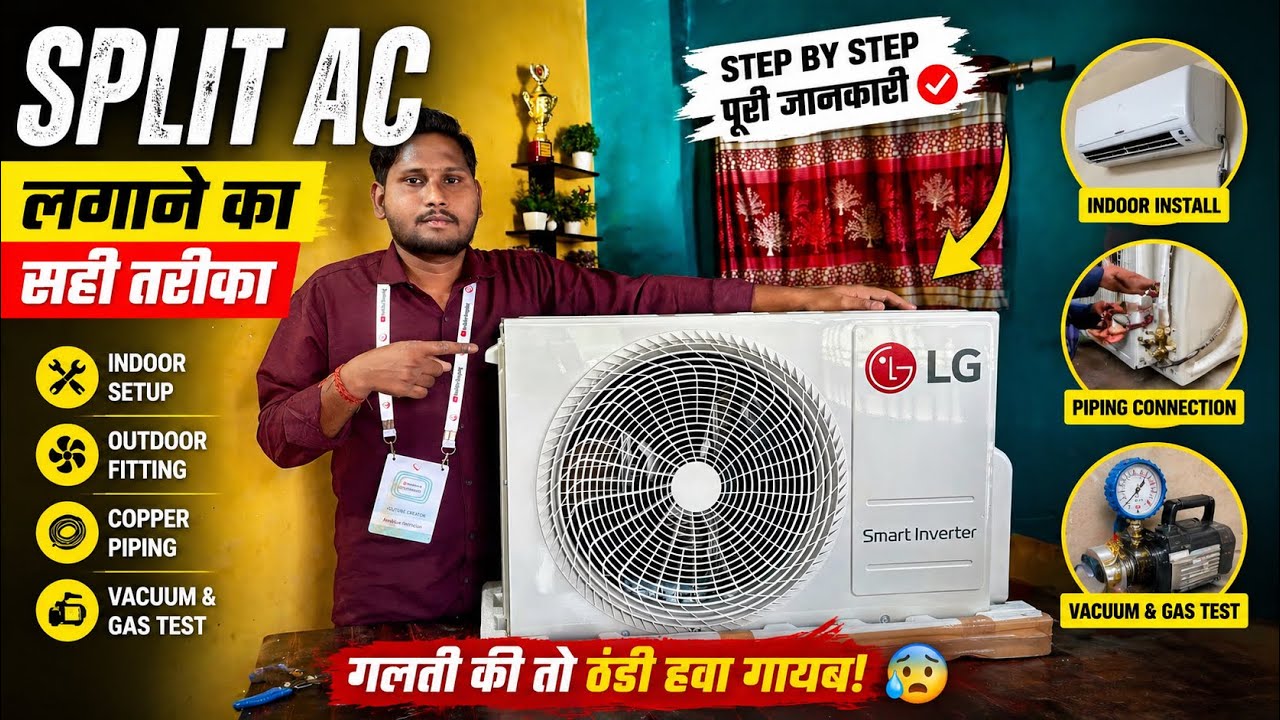
DIY vs. Professional AC Installation: The Real Cost
The appeal of DIY air conditioning installation is obvious: skip the labor markup, work on your own schedule, and feel the satisfaction of doing it yourself. But for central AC and heat pump systems, the calculus is less favorable than it looks on the surface. This article breaks down what each path actually costs — in money, time, risk, and legal exposure — so you can make a clear decision.
What "DIY AC Installation" Can and Cannot Mean
Most homeowners who consider DIY installation are thinking about ductless mini-split systems, because they are marketed as more accessible than central AC. The short version: you can do some of the work yourself, but you almost certainly cannot do all of it legally.
Here is why: refrigerant handling requires an EPA Section 608 certification. It is a federal law — not a suggestion. Purchasing refrigerant (R-32, R-454B, or any other regulated refrigerant) in bulk quantities without this certification is illegal for individuals. Venting refrigerant to atmosphere is also a federal violation. This single fact eliminates the core of a full mini-split installation from the DIY column for most homeowners.
What Professional Installation Actually Costs in Massachusetts
Professional installation costs vary by system type, home size, and whether ductwork is involved. These ranges reflect typical Massachusetts market conditions:
These figures include equipment, labor, permits, refrigerant, and a startup check. They do not include Mass Save rebates, which can reduce heat pump costs by up to $8,500.
What DIY Actually Costs
Let us be specific about the "DIY" scenario most homeowners are actually considering: purchasing a pre-charged mini-split kit online, mounting the indoor and outdoor units, and hiring a licensed HVAC technician only for the refrigerant work and final connection.
Equipment Costs
Online mini-split kits (single-zone, 1 ton) typically run $700–$1,500 for brand names. Multi-zone systems scale from $1,500–$4,000+ for the equipment alone. Be cautious: off-brand units may not carry AHRI certification, may not appear on the Mass Save Qualified Products List, and may have poor warranty support.
Tools You Will Need
Labor You Will Still Need to Hire
- Licensed HVAC technician for refrigerant work: $150–$400 depending on the technician and scope.
- Licensed electrician for new circuit or disconnect: $200–$500 in most MA markets.
- Permit fees: Variable by municipality, typically $75–$250 for HVAC permits in Massachusetts.
Total DIY Scenario (single-zone, realistic)
Compare that to central ac installation MA a professional single-zone install at $3,500–$6,000. The savings window is real — roughly $400–$2,300 — but narrower than the equipment-only price difference suggests, and it comes with meaningful strings attached.
The Risks DIY Introduces
Warranty Voidance
Most equipment ductless ac installation Worchester manufacturers require installation by a licensed HVAC contractor to honor the warranty. If a compressor fails in year three and the manufacturer determines the system was self-installed, the warranty claim may be denied. On a $1,000–$4,000 piece of equipment, that is a real financial exposure.
Permit and Insurance Risk
In Massachusetts, HVAC work on permanently installed systems generally requires a permit. An unpermitted system can create complications when you sell the home — some buyers and their inspectors will flag unpermitted HVAC work, and your homeowner's insurance may not cover damage from an improperly installed system.


Refrigerant Handling Errors
An improperly flared line connection can cause a slow refrigerant leak that degrades system performance over months before you notice. The system appears to cool, just not well. Diagnosing and correcting this requires a technician anyway — at additional cost.
Where DIY Makes Sense
Homeowners researching ac installation often find that the most practical hybrid approach is mounting brackets, running line sets through walls, and handling the physical placement of equipment — then having a licensed technician handle refrigerant and electrical sign-off. This saves several hours of technician labor while keeping you legal.
Window and portable AC units, of course, require no license, no permit, and no refrigerant handling. If your cooling need is small and your goal is simply to stay comfortable, a window unit remains a completely legitimate, no-risk option.
The Honest Bottom Line
For central AC and heat pump systems, full DIY installation is not a realistic path for most Massachusetts homeowners — federal refrigerant law and local permit requirements close that door. For mini-splits, a hybrid approach (DIY prep + licensed refrigerant work) can save $500–$1,500 on a single-zone system, but requires you to accept warranty risk and tool investment.
If the numbers matter, get two or three professional quotes first. The market spread between contractors in Massachusetts is often wide enough that a competitive quote beats the DIY scenario without any of the risk.
About the Author
This article was written by a home improvement and HVAC content specialist with a focus on residential systems in the Northeast. Their work covers installation costs, contractor selection, and the practical realities of energy-efficiency upgrades for New England homeowners.
MassHVAC 25 Mason St Worcester, MA 01609 (508) 501-7561