The US Department of Energy places the national average lifespan of a central air conditioner at 15 to 20 years. Utah HVAC contractors and industry research consistently document the actual service life in the Salt Lake Valley at 12 to 15 years for maintained systems, and as low as 8 to 12 years for systems with deferred maintenance. The Wasatch Front's combination of intense summer heat cycling, valley floor inversion dust, and hard water mineral accumulation in equipment accelerates component wear in ways that moderate-climate markets do not experience, compressing the service life that national averages describe.
Each time a compressor starts, it draws locked rotor amperage that is 3 to 5 times higher than its normal running amperage. This startup surge produces internal heat and mechanical stress in compressor windings and bearings that does not occur during steady-state operation. A system that short cycles 8 to 10 times per hour due to oversizing, duct leakage, or low refrigerant accumulates startup stress events at a rate that measurably shortens compressor service life compared to a properly sized system completing full cooling cycles. This is documented by ACHR News and referenced in HVAC installation engineering data, and it is the primary mechanical reason why improperly sized or maintained AC systems in older South Salt Lake bungalows fail earlier than the equipment's rated service life would indicate.
Industry data cited by ACHR News documents that approximately 30 percent of compressor failures in residential AC systems trace directly to installation errors, the most common of which are improper refrigerant charge and incorrect equipment sizing. An oversized system installed without a Manual J load calculation short cycles as described above. An improperly charged system forces the compressor to operate outside its designed pressure-temperature envelope, increasing internal operating temperatures and accelerating bearing and winding degradation. Both failure modes are preventable at installation and are disproportionately common in the post-war housing stock of Salt Lake County communities where original equipment was replaced without a full system assessment.
South Salt Lake's residential inventory is dominated by homes built between the late 1940s and the early 1980s. The bungalows and ranch-style homes along the Oakland Avenue corridor and throughout the zip codes 84106 and 84115 were not designed around modern central air conditioning. Many were originally cooled by evaporative coolers, and the conversion to central AC systems happened in waves through the 1990s and 2000s using equipment that is now between 15 and 25 years old. That age range puts most of these systems well past the 12 to 15 year expected service life that Utah contractors and equipment manufacturers document for Wasatch Front AC installations.
The ductwork is the hidden problem. When HVAC contractors converted South Salt Lake homes from evaporative cooling to central AC in the 1990s, they often adapted existing supply trunk lines that were sized for lower static pressure systems. A central AC blower motor moving air through an undersized or partially collapsed flex duct run in a 1960s South Salt Lake attic works significantly harder than the same motor in a duct system designed to match the equipment's airflow requirements. That additional work load shortens blower motor service life, increases electricity consumption, and contributes to the short cycling pattern where the system turns on and off in rapid succession, that accelerates compressor wear faster than any other operating condition.

The compressor is the most expensive single component in a residential AC system, and it is the component that South Salt Lake homeowners most frequently need to replace or that drives them to full system replacement when the repair quote arrives. Short cycling damages compressors through a specific mechanism: each time the compressor starts, it draws a surge of electrical current called the locked rotor amperage, which is three to five times higher than the operating amperage the compressor draws during normal running. This startup surge produces internal heat and mechanical stress in the compressor windings and bearings. A system that starts and stops twice per hour accumulates far fewer startup stress events than a system that short cycles eight to ten times per hour, and the difference in compressor service life between the two scenarios is measurable in years.
In South Salt Lake homes with undersized duct systems, low refrigerant charge from a slow leak, or an oversized AC unit that was selected by square footage rather than a proper Manual J load calculation, short cycling is the predictable result. The system cools the supply air rapidly, satisfies the thermostat before the full cooling cycle completes, shuts off, and then restarts within minutes when the house temperature climbs again. Each restart event deposits additional stress on the compressor, the run capacitor, and the contactor. The capacitor, which provides the voltage boost required for the compressor motor to start under load, is the component that typically fails first under this pattern, and a failed capacitor in South Salt Lake in July produces the warm air from vents emergency call that accounts for the majority of same-day AC service requests across the 84106, 84115, and 84119 zip codes during peak summer weeks.
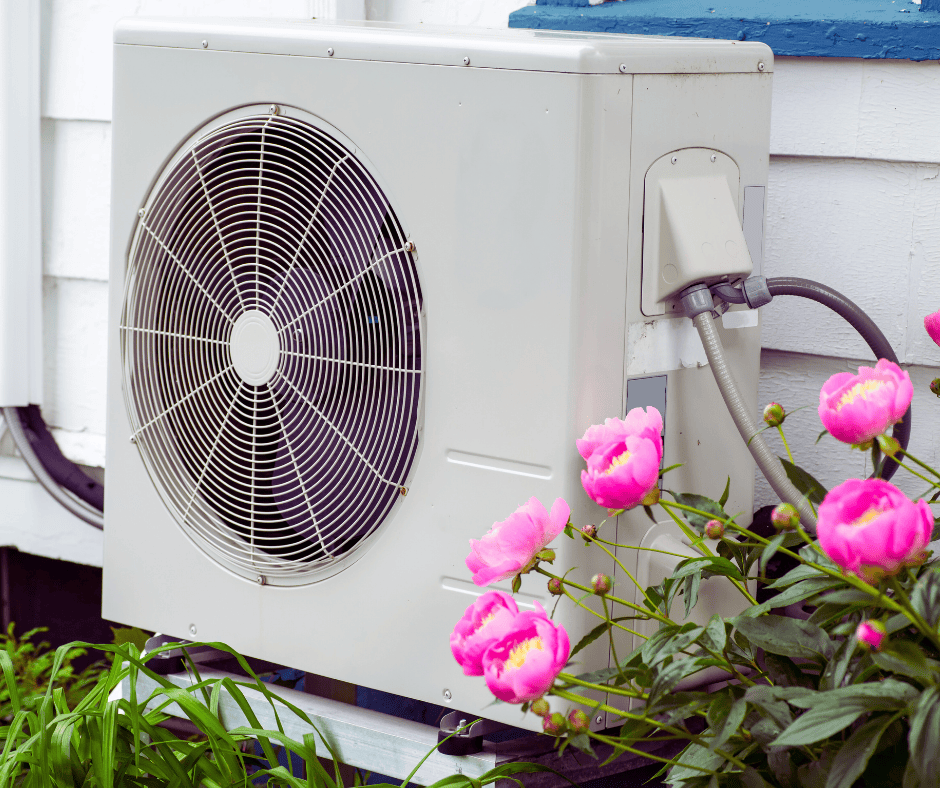
South Salt Lake's position alongside the Interstate 15 corridor and State Street produces a higher ambient particulate load in the air than residential neighborhoods further from major roadways. Fine particulate matter from vehicle traffic, road dust, and the industrial operations in the western portions of the city settles on condenser coil fins over time. The condenser coil is the heat rejection component of the AC system, specifically the outdoor unit's primary mechanism for releasing the heat extracted from the home into the outside air. When condenser fins are partially blocked by accumulated dust and debris, the coil cannot transfer heat at the rate the refrigerant circuit requires, head pressure rises, the compressor works harder against increased discharge pressure, and operating temperatures increase throughout the system.
A South Salt Lake condenser coil operating with 20 to 30 percent reduced airflow from fin fouling does not fail immediately. It degrades the system's efficiency measurably, raises electricity consumption, shortens compressor service life gradually, and contributes to refrigerant high-pressure trips that temporarily shut down the system on hot afternoons before it resets and resumes operation. Homeowners experiencing these intermittent shutdowns often attribute them to the system being overwhelmed by heat, which is partly true, but the underlying cause is typically a condenser coil that has not been professionally cleaned in multiple years combined with the refrigerant operating pressures that South Salt Lake's valley floor heat concentrations produce.
South Salt Lake homeowners with AC systems installed before 2025 are operating equipment charged with R-410A refrigerant. Under the federal phasedown of high-GWP refrigerants mandated by the American Innovation and Manufacturing Act, R-410A production has been curtailed and new AC installations from 2025 onward require low-GWP refrigerants, primarily R-454B. The practical consequence for South Salt Lake homeowners with aging R-410A systems is that refrigerant recharge now costs more than it did two years ago, and that cost will continue to rise as R-410A supply tightens further.
For a South Salt Lake homeowner facing a refrigerant leak repair on a system that is already 15 years old, the repair economics in 2026 differ meaningfully from prior years. The material cost of R-410A recharge has increased, and that cost adds to a repair that, on an aging compressor, may only provide another season or two of reliable operation before the next major failure. A system in this condition is a strong candidate for replacement with R-454B compliant equipment that qualifies for the federal Inflation Reduction Act 25C tax credit, which provides up to 30 percent of project cost, capped at $2,000 per year, for qualifying high-efficiency heat pump and AC installations. Rocky Mountain Power's Wattsmart program also offers rebates for high-efficiency equipment that exceeds 16 SEER2, and the combination of these incentives reduces the net replacement cost meaningfully for South Salt Lake homeowners who qualify.
The Southwest region minimum SEER2 requirement for new AC installations is 14.3. For South Salt Lake specifically, the calculus on equipment efficiency is different from desert markets like Phoenix or Las Vegas, where systems run for eight to nine months annually. The Wasatch Front cooling season concentrates into four to five intense months, with the sharpest load occurring across approximately 60 to 90 peak days from late June through August. A high-efficiency 18 SEER2 variable-speed system produces measurable monthly savings during those peak months compared to a 14.3 SEER2 single-stage system, but the return on investment calculation also needs to account for the Wasatch Front's heating season, where a dual-fuel heat pump or high-efficiency gas furnace combination provides integrated annual savings that a standalone AC replacement does not.
Just Right Plumbing, Heating, & Cooling installs Trane and Carrier systems in South Salt Lake homes sized to a Manual J load calculation that accounts for the actual insulation values, window area, orientation, and duct system condition of each specific home rather than a square footage rule of thumb. An oversized system installed in a South Salt Lake bungalow produces the short cycling pattern described earlier regardless of its SEER2 rating. A properly sized system installed in a sealed and verified duct system runs longer cycles, removes moisture from the supply air more effectively, and delivers the efficiency numbers on its rating label rather than the degraded performance that improper sizing and leaking ductwork produce.


The failure clustering that Just Right technicians observe across South Salt Lake follows a predictable calendar. Most AC systems in the 84106, 84115, and 84119 zip codes have been through at least one full summer before the failure that produces the emergency call. The system survived the previous summer by operating at reduced efficiency by running longer cycles, drawing more electricity, occasionally tripping off on high-pressure faults and resetting, without the homeowner recognizing these symptoms as failure precursors. When July arrives with the first sustained stretch of 100-degree days, the system that was already operating at its mechanical limits does not have the capacity reserve to handle the additional load and fails completely.
The component that fails in this scenario is almost always the run capacitor or the contactor, which are the electrical components most sensitive to the cumulative thermal stress of multiple hot seasons. A capacitor that was installed when the system was new in 1998 and has survived 25 South Salt Lake summers has been thermal-cycling daily through the valley floor's summer heat for a quarter century. By the time it fails, it was already operating near its rated limits. The failure is not sudden; it was gradual degradation that produced an instantaneous symptom on the hottest day of the year.
South Salt Lake's municipal water supply, delivered from the Wasatch watershed, consistently tests as hard to very hard on the dissolved mineral scale. Calcium and magnesium in the water supply deposit scale on every water-contacting surface inside HVAC equipment. For AC systems, the most direct impact is on the condensate drain line. As the evaporator coil removes moisture from the cooled air supply during the summer cooling cycle, that moisture collects in the drain pan and exits through the condensate drain line. Mineral scale from South Salt Lake's hard water deposits on the interior of the PVC drain line over time, gradually narrowing the drain diameter. A drain line that is sufficiently narrowed will back up, overflow the drain pan, and trip the safety float switch that shuts off the compressor to prevent water damage to the air handler cabinet and the surrounding mechanical space.
This condensate drain shutdown is one of the most common AC service calls Just Right receives across Salt Lake County during August, when the monsoon-influenced humidity spikes that reach the Wasatch Front increase the moisture load the evaporator coil handles per hour. A drain line that managed adequately during dry June conditions may back up within hours during an August humidity event. The fix is straightforward, but it requires same-day service because a South Salt Lake home in August with a locked-out AC system on a 95-degree afternoon reaches uncomfortable indoor temperatures within two to three hours of the shutdown. Regular condensate drain flushing as part of annual pre-season AC maintenance prevents this shutdown entirely.

Just Right Plumbing, Heating and Cooling has served South Salt Lake and the Wasatch Front since 1977. The company provides AC repair, AC installation, AC replacement, HVAC maintenance, emergency AC service, heat pump installation, furnace repair, plumbing repair, drain cleaning, and water heater service throughout South Salt Lake in zip codes 84106, 84115, and 84119, and across Salt Lake County including Murray, Midvale, Millcreek, Holladay, West Valley City, Taylorsville, Sandy, Draper, and the broader Salt Lake City metro area. Every technician is NATE-certified, EPA 608 certified, and trained on current R-454B refrigerant handling requirements. Service is available 24 hours a day, 7 days a week for AC emergencies. Upfront flat-rate pricing is presented before any work begins, with no hidden fees. The 100% satisfaction money-back guarantee and 10-year parts and labor warranty apply on all new system installations. Call +1 801-302-1154 for emergency AC repair, AC installation, or HVAC service throughout South Salt Lake and Salt Lake County.
Redirect to: