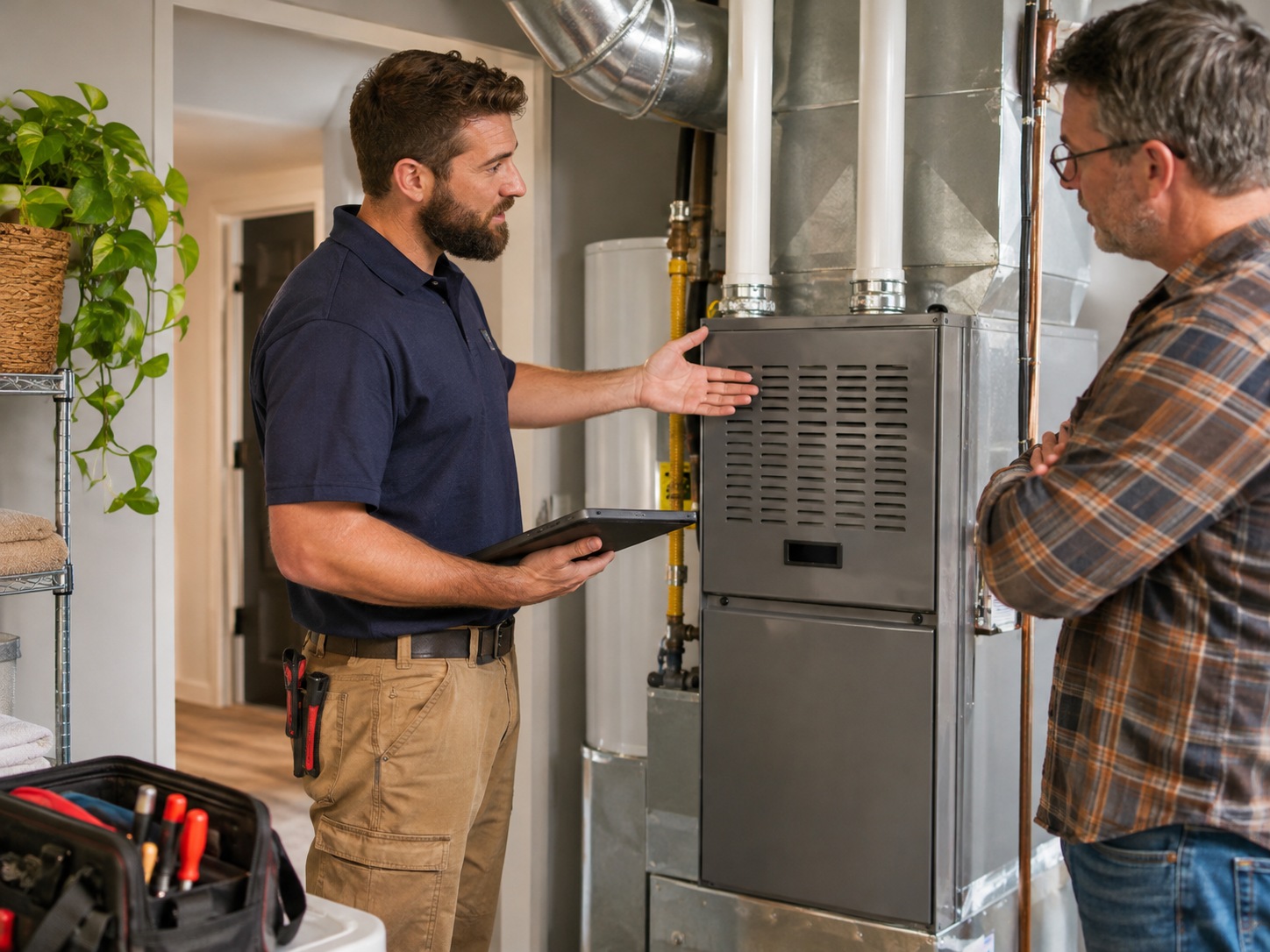
Of all the reasons to take furnace repair in Roy seriously, carbon monoxide is the one that matters most. A gas furnace burns fuel inside the home, and when combustion or venting goes wrong, the byproduct is a colorless, odorless gas that can harm a family before anyone realizes anything is wrong. This is a delicate subject, and the goal here is accurate information rather than alarm: understanding how carbon monoxide relates to a furnace helps a homeowner know which warning signs genuinely call for shutting the system down.
This article is general educational information about gas furnace safety. It is not a diagnosis of any particular system, and any suspected carbon monoxide problem is an emergency that calls for leaving the home and contacting emergency services, not a repair to attempt.
Where carbon monoxide comes from
A gas furnace produces heat by burning natural gas, and complete combustion yields mostly carbon dioxide and water vapor, which vent safely outside. Carbon monoxide forms when combustion is incomplete, from dirty burners, poor airflow, improper gas pressure, or inadequate combustion air. In a healthy furnace, whatever small amounts form are carried out through the heat exchanger and flue. The danger arises when that exhaust path is compromised and combustion gases reach the home's indoor air instead of leaving the house.
Roy's altitude adds relevance. Thinner air can push a poorly adjusted furnace toward incomplete combustion, which is part of why high-altitude derating and an annual combustion reading matter so much in this valley. A furnace that burns cleanly at sea level can produce more carbon monoxide here if it was never set up for the elevation, which is a point homeowners rarely hear but technicians who work the Wasatch Front understand well. It is one more reason furnace repair in Roy includes a combustion check.
The heat exchanger is the critical barrier
The heat exchanger is the metal wall that separates the burning gas and its exhaust from the household air the blower circulates. Air passes over the outside of this metal, picks up heat, and travels into the home, while combustion gases stay inside the exchanger and vent outdoors. As long as that barrier is intact, the two never mix. A crack in the heat exchanger breaks that separation and can let carbon monoxide into the air the furnace is pushing through the house.
Heat exchangers crack from age and from the repeated expansion and contraction of heavy use, which is exactly what a long Roy winter delivers. Overheating from restricted airflow accelerates it, which is one more reason a clogged filter is not a trivial matter. A cracked heat exchanger is why furnace repair in Roy sometimes means shutting a system off entirely until it is inspected, because no amount of heat is worth running a furnace that may be releasing carbon monoxide into the home.
Detectors are the defense you can count on
Because carbon monoxide has no color or smell, working detectors are the only reliable way a household knows it is present. Roy homes should have carbon monoxide detectors on every level and near sleeping areas, with batteries checked regularly and the units themselves replaced on the schedule the manufacturer specifies, typically every five to ten years. A detector that chirps for a low battery or has reached its end of life gives no protection, so keeping them current is as important as having them at all.
A carbon monoxide detector going off is not a nuisance to silence. The correct response is to get everyone out of the house into fresh air and call 911 from outside, then have the furnace inspected before it runs again. Detectors and an annual combustion inspection work together: the inspection aims to catch a problem before it starts, and the detector is the backup for anything the inspection could not predict between visits. Both together are what actually protect a household.
Warning signs worth knowing
Beyond a detector alarm, there are physical clues that combustion may be off. A furnace flame should burn steady and blue; a yellow, flickering, or wavering flame can signal incomplete combustion and warrants a professional look. Heavy condensation on windows near the furnace, soot around the unit or vents, and a stale quality to the air can also accompany combustion problems, though none of these is definitive on its own. Taken together, they are reasons to call for furnace repair in Roy rather than wait.
The human symptoms of low-level carbon monoxide exposure are easy to mistake for winter illness: headaches, dizziness, nausea, fatigue, and confusion, often affecting several people in the household at once and easing when they leave the house. That pattern, symptoms that improve outdoors and return indoors, is a meaningful warning. Anyone noticing it should treat it as a possible carbon monoxide problem, leave the home, and get both medical and professional attention rather than dismissing it as a passing bug.
Venting problems specific to a snowy valley
In Roy, winter creates a venting risk milder climates do not face. High-efficiency furnaces vent through PVC pipes that often exit a sidewall, and heavy lake-effect snow or drifting can block the exhaust. When exhaust cannot escape, combustion gases including carbon monoxide can back up. Modern furnaces have a pressure switch that locks the system out when venting is blocked, which is a safety feature, but it depends on the switch working and the furnace being reasonably modern to protect the home.
Older furnaces that vent through a metal flue into a chimney face a different version of the same risk. A blocked or deteriorating chimney, a bird nest, or a disconnected vent pipe can interrupt the exhaust path. Keeping outdoor vents clear of snow after storms and having the venting inspected during annual service are the practical defenses. A furnace that keeps locking out on its pressure switch should be inspected rather than reset repeatedly, since the lockout is the system reporting a venting problem that furnace repair in Roy should address.
When to shut it off and call for help
Some situations call for turning the furnace off immediately rather than scheduling a repair. A carbon monoxide detector alarm, a smell of gas, a loud boom on ignition, visible soot or scorching around the furnace, or household members showing the exposure symptoms described above all mean stop. For a gas smell or a detector alarm, the right move is leaving the home and calling 911 and the gas utility from outside, not investigating the furnace yourself. This is the one area where caution always wins.
For less acute concerns, a yellow flame, an older furnace never checked for a cracked heat exchanger, or a system that has been short cycling and overheating, the furnace should be inspected before the heating season's heaviest use. A licensed technician can perform a combustion analysis that measures carbon monoxide directly and inspect the heat exchanger for cracks, the kind of verification that tells a family the furnace is safe rather than only working. That is what responsible furnace repair in Roy provides.
How combustion safety ties into routine repair
Carbon monoxide is not a separate topic from everyday furnace repair in Roy; it runs through almost every service decision. The clogged filter that causes overheating also stresses the heat exchanger that keeps combustion gases out of the home's air. The short cycling that seems like a comfort annoyance is the same overheating that cracks that metal over time. This is why a technician handling routine furnace repair in Roy should still take a carbon monoxide reading, because the small complaint and the safety question are often the same system under strain.
It also explains why reputable furnace repair in Roy treats a suspected cracked heat exchanger as a stop-work condition rather than an optional fix. A furnace that overheats repeatedly, shows soot, or produces elevated carbon monoxide on a combustion test is flagged for inspection before it runs further, not patched around to buy a season. The judgment that separates a safe repair from a dangerous shortcut is exactly what a licensed, instrument-equipped technician is there to provide.
The role of combustion testing
Digital combustion analysis is the measurement that turns furnace repair in Roy from guesswork into verification. The analyzer samples the exhaust and reports carbon monoxide levels and combustion efficiency, telling the technician whether the furnace is burning cleanly or drifting toward the incomplete combustion that thinner high-altitude air can encourage. A furnace can appear to run fine and still show combustion numbers that warrant attention, which is why the reading matters even when the owner reports no obvious problem.
For a homeowner, the value of combustion testing is that it replaces reassurance with data. A furnace repair in Roy that ends with documented, acceptable carbon monoxide and combustion figures gives a family real confidence the system is safe, not just working. Those numbers also build a baseline, so a later drift toward higher carbon monoxide becomes visible across annual visits rather than going unnoticed until a detector sounds in the middle of the night.
Teaching the household the plan
Carbon monoxide safety is partly technical and partly a household matter, and the second half is easy to overlook. Every member of a home old enough to understand should know what a carbon monoxide alarm sounds like, that it means leaving the house immediately, and that the gas utility and 911 are called from outside rather than from indoors. A plan rehearsed once is worth far more than a detector no one reacts to correctly, and it costs nothing but a short conversation at the start of the heating season.
It also helps to know the home's equipment: where the furnace is, where its shutoff is, and where the detectors sit. A household that can locate and shut off the furnace, and that keeps detectors current near sleeping areas, is far better positioned to handle a problem calmly than one caught unprepared. These basics turn carbon monoxide from an abstract fear into a managed risk, which is the right place for any family heating with gas to stand through a Roy winter.
Everyday habits that lower the risk
Between professional visits, a few habits keep combustion risk low. Changing the filter on schedule prevents the overheating that stresses the heat exchanger. Keeping the furnace area clear and the outdoor vents free of snow protects the exhaust path. Testing carbon monoxide detectors regularly and replacing them on the manufacturer's schedule keeps the backup defense live. And treating a yellow flame, soot, or flu-like symptoms that ease outdoors as reasons to call rather than wait is the habit that matters most of all.
None of this replaces professional furnace repair in Roy when something is wrong, but together these habits reduce how often something goes wrong and how severe it becomes. The combination that actually protects a household is consistent: working detectors, an annual combustion inspection, prompt attention to warning signs, and a licensed technician for anything touching the burners, venting, or heat exchanger. That is the whole of furnace carbon monoxide safety in practical terms.
Carbon monoxide is the reason furnace safety is not a place to cut corners, and the combination of working detectors and an annual combustion inspection covers the real risks for most homes. When a furnace shows signs of a combustion or venting problem, or simply has not been checked in years, a licensed contractor such as One Hour of Utah can run a combustion analysis and inspect the heat exchanger to confirm the system is safe, and can be reached at (801) 829-7633.