
Crabapple homeowners know the pattern well. Downstairs stays comfortable through most of a Georgia summer. The thermostat reads 74 degrees. The living room feels fine. But climb the stairs after 2 p.m. in July and the temperature difference is immediate and stark. Bedrooms hover at 80 degrees or warmer. The air handler runs constantly. Energy bills climb. And no matter how low the thermostat is set, the second floor never quite catches up.
This is not a coincidence, and it is not a quirk of any individual home. It is a predictable result of how two-story construction in the 30004 zip code interacts with Georgia's humid subtropical climate, standard HVAC system design, and the specific thermal characteristics of Crabapple's residential building stock. Understanding why this happens (in technical terms) is the first step toward correcting it permanently.

Heat moves in three ways: conduction through solid materials, convection through air movement, and radiation through open space. In a two-story Crabapple home, all three forces work against the second floor simultaneously during summer months.
Conditioned air from the air handler is denser and heavier than warm air. It settles. Warm air rises to fill the upper volume of the home, concentrating near ceilings and in second-floor rooms. This thermodynamic stratification is constant and unavoidable in any two-story structure, but it becomes severe when the HVAC system was not designed to compensate for it. A single-zone central air conditioning unit with uniform duct distribution treats the entire home as one thermal mass, delivering the same volume of conditioned air to both floors regardless of where heat is accumulating.
The second force is radiant heat from the roof assembly. Crabapple sits in North Fulton County at an elevation where summer sun angles drive attic temperatures between 130 and 150 degrees Fahrenheit on clear July and August afternoons. That heat radiates downward through the ceiling plane directly into second-floor rooms. Even a well-insulated attic transfers meaningful BTUs into the living space below. A bedroom positioned directly under an unshaded roof section absorbs radiant heat continuously throughout the afternoon hours, and no amount of airflow from an undersized supply register can offset that load in real time.
The third force is duct heat gain. Supply ducts running through unconditioned attic space absorb heat before the conditioned air they carry reaches second-floor registers. Ducts in a Crabapple attic operating at 140 degrees can raise the temperature of the air inside them by 5 to 10 degrees before it exits into a bedroom. The air arrives warm, delivers less cooling capacity than the system intended, and the room temperature lags behind the thermostat setpoint indefinitely.
On a typical 90°F summer day, attic temperatures climb between 130°F and 150°F in poorly ventilated or under-insulated homes. When outside air is only 95 to 97°F, attics can reach 150 to 160°F meaning the space directly above your second-floor bedrooms runs at roughly the temperature of a commercial oven during peak afternoon hours in Milton.
Research by the Florida Solar Energy Center at the University of Central Florida measured heat gain inside supply ducts routed through unconditioned attic space. At a peak attic air temperature of 140°F, the computed sensible heat gain under peak conditions amounts to approximately 6,130 BTU per hour, which equals about half a ton of lost cooling capacity. That is cooling your system produces but your second floor never receives.
According to the U.S. Department of Energy, approximately 25% of a home's energy loss occurs through an uninsulated or improperly ventilated attic. For a two-story home in Crabapple running its AC system through a Georgia summer, that figure translates directly into the gap between what the thermostat is set to and what the second floor actually reaches.
Crabapple's residential character is defined by large-format homes built predominantly between 1995 and 2015 along Birmingham Highway and the streets surrounding Crabapple Market. These homes are architecturally ambitious: high ceilings, open floor plans, significant glass area on southern and western exposures, bonus rooms above garages, and complex rooflines with varying attic depths. Each of these features adds a layer of thermal complexity that standard HVAC design calculations frequently underestimate.
Open floor plans with two-story great rooms create what HVAC engineers call a stack effect. Warm air rising through the open volume from the ground floor generates a continuous convective current that deposits heat at the upper level. Homes in the Crabapple area with two-story foyers or great rooms can show temperature differentials of 8 to 12 degrees between the ground floor and the second-floor hallway even when the system runs without interruption.
Bonus rooms above garages present a distinct challenge. The garage below is an unconditioned space that reaches extreme temperatures in summer. The floor assembly between the garage ceiling and the bonus room floor receives no insulation benefit from the HVAC system, and the garage walls often have minimal thermal separation from outdoor air. A bonus room above a garage in Crabapple can require 30 to 40 percent more cooling capacity per square foot than a comparable room positioned over a conditioned first-floor space. When the original HVAC system did not account for this, the bonus room becomes the hottest space in the home.
West-facing bedroom windows accelerate the problem significantly. Crabapple's street grid runs in orientations that place many master bedrooms on the western side of homes, directly in the path of late-afternoon sun. A west-facing bedroom window with standard double-pane glass admits solar heat gain equivalent to running a 1,500-watt electric heater continuously between 3 p.m. and sunset. The air handler and the supply register serving that room are almost never sized to absorb that kind of localized load.
The root technical cause in most Crabapple two-story homes is a single-zone central AC system applied to a structure that requires zoned temperature management. A single air handler with one evaporator coil, one thermostat, and a single blower motor controls conditioned air delivery for the entire home. The thermostat is typically located on the first floor, in a hallway or common area that stays cooler than the second floor due to the stratification described above. When the thermostat reaches setpoint, the system shuts off. The second floor, which may still be 6 to 10 degrees warmer, receives no additional cooling.
This creates a feedback loop. The second floor stays warm, conducting heat downward through the ceiling plane. The first floor warms slightly, the thermostat calls for cooling, the system restarts, cools the first floor back to setpoint, and shuts off again before the second floor has time to catch up. The system short cycles in a pattern that drives up energy consumption without resolving the comfort issue. A homeowner in the Wyndham Farms subdivision who keeps the thermostat at 72 degrees may run the system for 20 or more hours per day through August without achieving that temperature upstairs.
Refrigerant charge plays a direct role as well. A system operating with a low refrigerant charge due to a slow leak at the evaporator coil or the lineset connections loses cooling capacity progressively. The first symptom is typically that the second floor stops cooling while the ground floor still feels acceptable. At low refrigerant levels, the evaporator coil cannot absorb enough heat to condition the full volume of return air passing through it. The air handler delivers partially conditioned air throughout the home, but the second floor, already fighting stratification and attic heat load, falls below the threshold of comfort first.
A faulty run capacitor produces similar early symptoms. The capacitor provides the electrical charge that starts the condenser fan motor and maintains efficient compressor operation. When a capacitor begins to fail, the compressor starts under load, draws excess current, and runs at reduced efficiency before the fault progresses to a complete failure. During the partial failure period, the system appears to run normally but delivers less cooling per hour of operation. The second floor, which requires the most cooling capacity, shows the deficit first.
The Manor Golf and Country Club and White Columns represent Crabapple's largest residential format, with estate homes commonly exceeding 5,000 square feet across multiple levels, separate wings, and detached guest structures. Homes of this scale in the 30004 area are typically served by multi-zone HVAC systems using multiple air handlers, zone dampers controlled by individual thermostats, and in many cases variable speed equipment with inverter-driven compressors.
Multi-zone systems installed in these estates require separate diagnostic sequences for each air handler zone, a process that differs significantly from single-zone central AC troubleshooting. When a zone damper fails in the open position, the zone it serves receives uncontrolled airflow regardless of whether that zone is calling for cooling. The air handler runs continuously, the thermostat in the affected zone cannot satisfy, and the homeowner experiences the familiar symptom of a room that never reaches setpoint. When a zone damper fails closed, that zone receives no conditioned air at all.
Variable speed air handlers paired with high-efficiency SEER2 systems in The Manor estates adjust blower speed and compressor output dynamically based on load. These systems manage the stratification problem better than single-speed equipment because they run longer cycles at reduced capacity, maintaining steady airflow and more consistent temperature distribution across multiple floors. However, their inverter-driven components require diagnostic tools specific to each manufacturer. Daikin Fit systems and Mitsubishi Electric mini-split configurations use proprietary communication protocols between the indoor and outdoor units that standard manifold gauges and pressure checks cannot assess accurately.
Milton's location in North Fulton County places it within a humid subtropical climate band that delivers dew points between 65 and 72 degrees Fahrenheit throughout the summer months. At those dew points, the air conditioning system must remove moisture from the air before it can lower the perceived temperature. Latent heat removal, which is the energy required to dehumidify air, consumes a significant portion of the system's total cooling capacity. A system that is adequately sized for dry conditions can fall short in Milton's summer humidity, particularly on the second floor where both sensible and latent loads are higher.
When indoor relative humidity climbs above 55 percent, the home feels warmer than the thermostat reading indicates. A second floor measuring 76 degrees at 65 percent relative humidity feels equivalent to 80 degrees at 45 percent relative humidity. Homeowners who report that the upstairs feels hot despite the thermostat showing an acceptable temperature are frequently experiencing a humidity problem as much as a temperature problem. A condensate drain line clogged with algae growth, a common occurrence in Georgia's summer conditions, reduces the system's ability to drain moisture from the evaporator coil, further degrading dehumidification performance.
Homes near Birmingham Park and along the tree-lined streets east of Crabapple Market have additional humidity exposure from the dense vegetation that characterizes North Fulton's residential landscape. Mature hardwood canopy holds moisture in the air longer after rain events and reduces the drying effect of direct sunlight on surrounding soil. These microclimatic conditions elevate ambient humidity relative to more open suburban areas, placing additional dehumidification demand on HVAC systems in Crabapple and the Birmingham Falls community specifically.
Original duct designs in homes built during Crabapple's primary development period frequently show two recurring deficiencies. The first is undersized return air capacity on the second floor. A properly designed two-story system requires dedicated return air pathways on each level. Many Crabapple homes have a single central return air grille on the first floor, drawing return air through door gaps and under-door clearances from second-floor rooms. This creates negative pressure in second-floor spaces, restricts airflow, reduces the volume of air the system can condition, and diminishes cooling performance throughout the upper level.
The second deficiency is supply register placement and sizing. Supply registers in second-floor rooms are frequently located on interior walls near doorways, positioned for cost efficiency during construction rather than for thermal performance. Registers should ideally be placed on exterior walls below windows or on ceiling planes to counter the specific heat sources those surfaces admit. Interior wall placement delivers conditioned air into the middle of a room where it mixes with warm stratified air before reaching the occupant zone near the floor. The room temperature at head height may be acceptable while the ceiling temperature exceeds 85 degrees, creating a comfort failure that thermostat readings do not capture.
A thorough AC repair diagnostic for a two-story Crabapple home addresses the system, the ductwork, and the building envelope together. Refrigerant pressure measurements using digital manifold gauges establish whether the system is operating at correct charge levels for the outdoor ambient temperature. Thermal imaging identifies duct leakage points in the attic, insulation gaps in the ceiling plane, and air handler components operating outside normal temperature ranges. Airflow measurements at each supply and return register establish whether the duct system is balanced across both floors or whether the second floor is receiving less than its designed share of conditioned air.
Component assessment covers the run capacitor, start capacitor, contactor, control board, and blower motor, the components most likely to show degradation in systems that run extended cycles through Georgia summers. A contactor showing pitting on its contact surfaces from repeated cycling can allow the compressor to start under excessive electrical load, shortening its service life and reducing efficiency during operation. A blower motor operating below rated speed due to a failing capacitor reduces airflow through the evaporator coil, decreasing heat transfer capacity and leaving the second floor short of conditioned air even when the compressor operates correctly.
For homes in The Highlands, Triple Crown, and the equestrian properties along Birmingham Highway with detached garages or guest structures served by separate ductless mini-split systems, inverter diagnostics require manufacturer-specific tools. Mitsubishi Electric systems communicate fault codes through their own service port protocols. Daikin Aurora systems store diagnostic history in the control board memory accessible only through Daikin's service interface. Standard pressure and electrical checks confirm whether these systems are running, but they cannot confirm whether they are running correctly at the efficiency levels their inverter technology is designed to maintain.
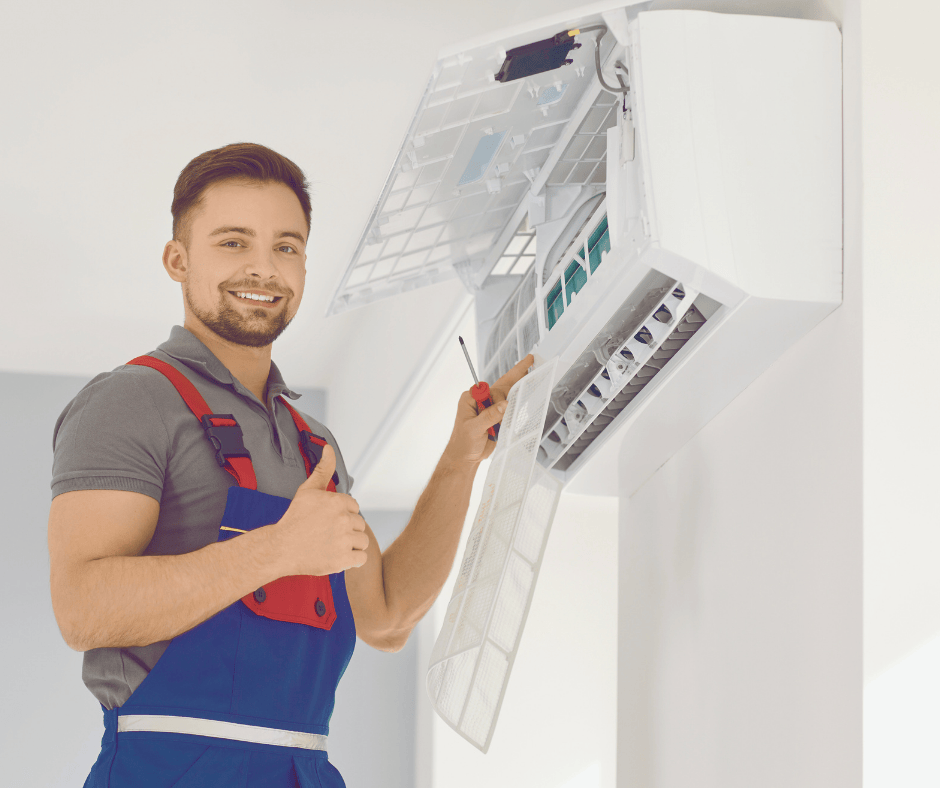
The second floor is the point of highest cumulative thermal stress in a two-story Crabapple home. It receives radiant heat from the roof assembly above. It accumulates warm stratified air rising from the first floor below. It sits at the end of supply duct runs that have already absorbed heat during their passage through the attic. Its return air pathway is typically the least direct in the system. And it is the farthest point from the thermostat that controls when the system runs and when it stops.
A system operating at 95 percent efficiency on the first floor can deliver an effective cooling capacity of 75 percent or less on the second floor due to these compounding factors. A 3-ton central air conditioning unit providing adequate first-floor cooling in a Birmingham Falls home may be functionally behaving like a 2-ton unit on the second floor during peak afternoon hours. That gap is not bridged by running the system longer or setting the thermostat lower. It requires addressing the specific losses: duct heat gain, stratification, return air restriction, and refrigerant performance, through accurate diagnosis and targeted correction.
Milton homeowners who have replaced their system in full and still experience the same second-floor comfort problem typically discover that the replacement equipment was sized and installed using the same duct configuration, the same thermostat location, and the same single-zone control strategy as the previous system. The new equipment performs identically to the old equipment because the building's thermal characteristics, not the equipment age, were the limiting factor.
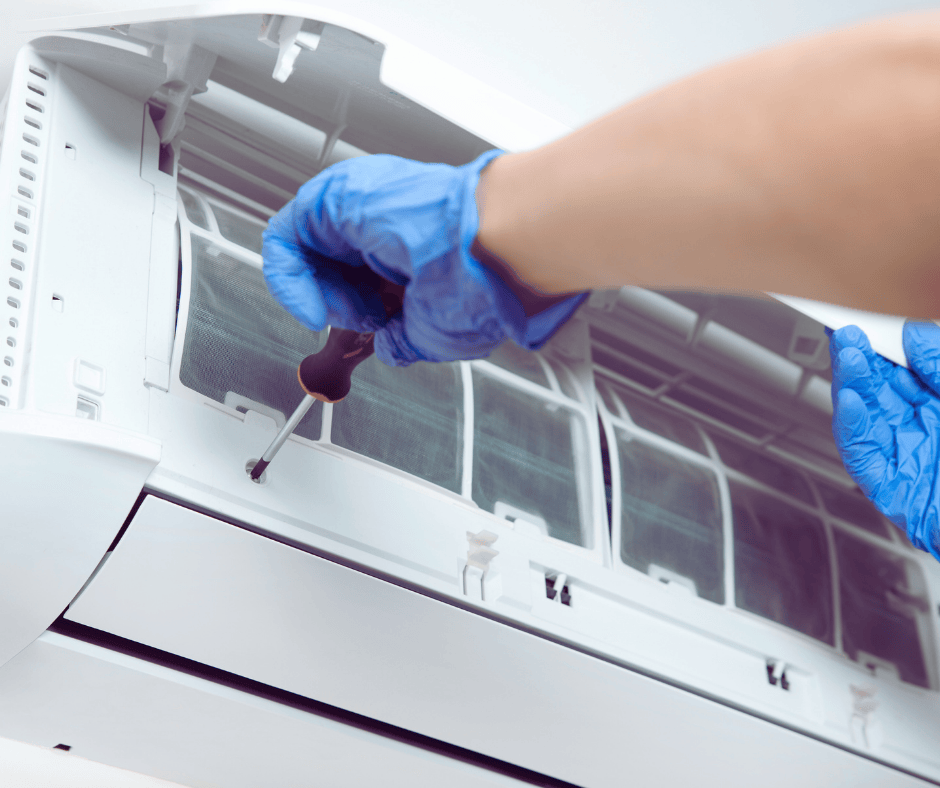
One Hour Heating and Air Conditioning of North Atlanta provides emergency AC repair in Milton GA, diagnostic service, and same-day HVAC assessments throughout the 30004 zip code, serving Crabapple, Birmingham Falls, The Manor Golf and Country Club, White Columns, Wyndham Farms, The Highlands, and every residential community from Triple Crown to Deerfield. Service extends to Alpharetta, Roswell, Johns Creek, and Cherokee County communities along the North Fulton corridor.
Every technician holds NATE certification, carries factory-authorized components for Trane, Carrier, Lennox, Rheem, and Goodman systems, and uses manufacturer-specific diagnostic equipment for Daikin and Mitsubishi Electric inverter systems. Service vehicles are fully stocked to complete most repairs in a single visit. One Hour holds Georgia Conditioned Air License GAREGCN2011384, and every technician is background-checked and EPA Universal Certified. The on-time guarantee means that if the technician is late, the diagnostic fee is waived. Every repair is backed by the 100 percent Satisfaction Guarantee. If the problem returns, so does the technician, at no additional charge. Homeowners in Milton and the surrounding North Fulton communities can reach One Hour Heating and Air Conditioning at (404) 689-4168 for same-day service scheduling.
Redirect to: