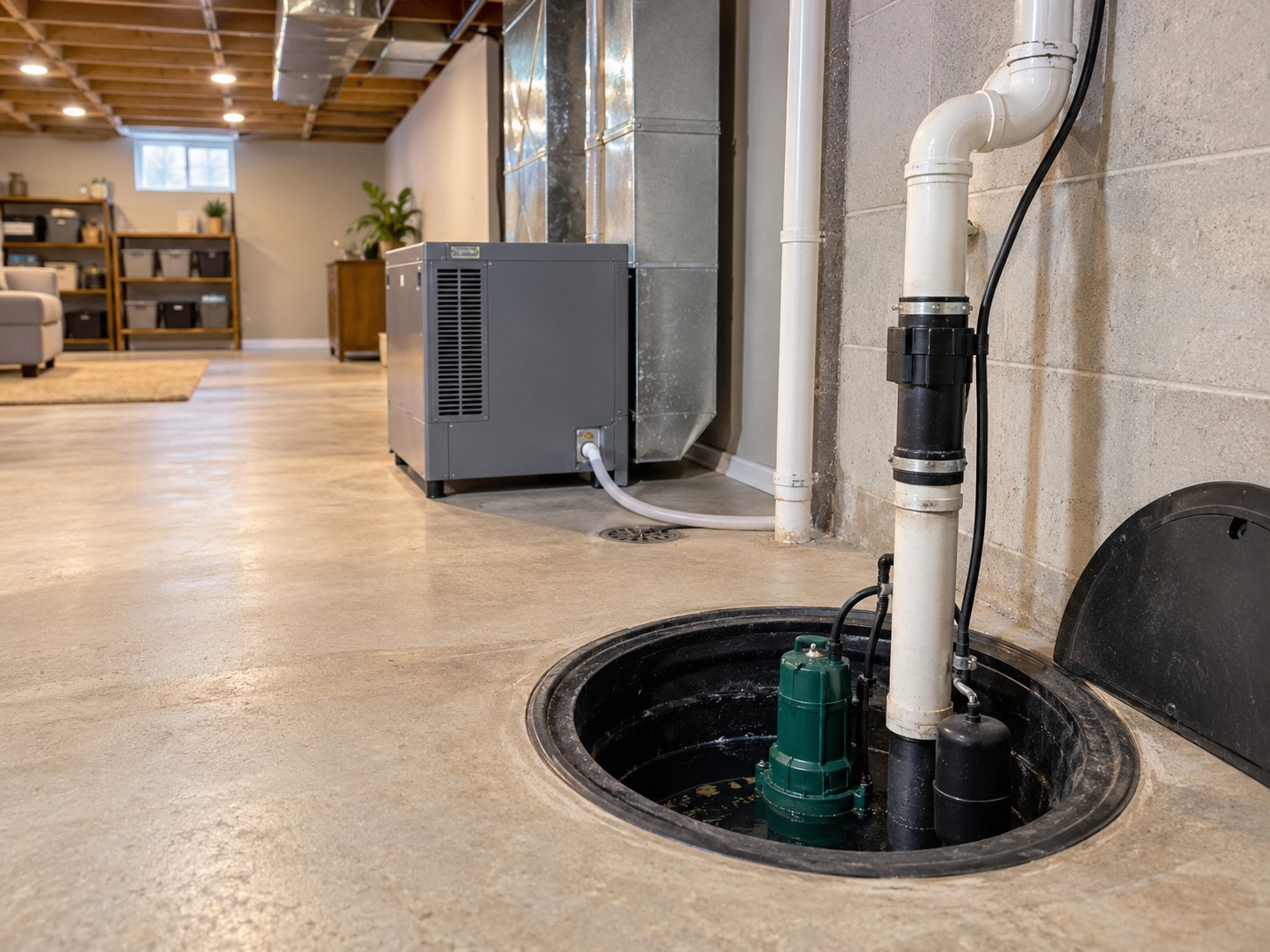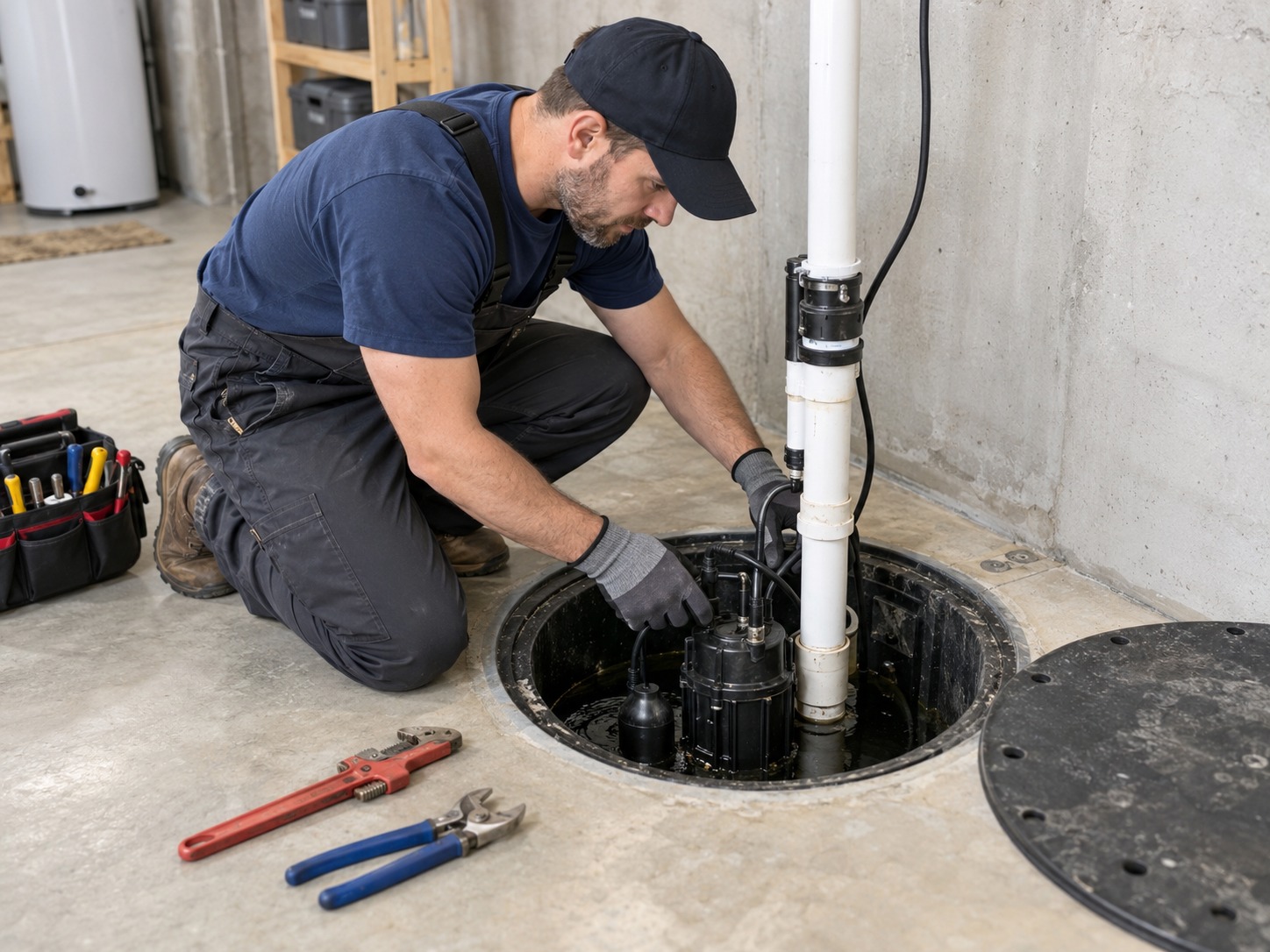
A sump pump sits quiet and forgotten for most of the year, then gets asked to save the house in the span of one violent Hill Country storm. The problem is that nobody finds out whether it still works until that exact moment, which is the worst possible time to find a seized float or a dead backup battery. A sump pump inspection moves that discovery to a calm, dry day, when a small fix is cheap and easy, instead of a storm night when the water is already rising. In Flash Flood Alley, a yearly sump pump inspection is the quiet habit that separates a protected home from a flooded one. Most sump pump failures are not sudden. They build slowly as sediment packs the pit, a float stiffens, a battery loses capacity, or a check valve wears out. A sump pump inspection catches these in progress, before they add up to a pump that cannot keep up with a downpour. Here is what a real inspection covers and why each check matters in the Boerne climate.
Boerne and Kendall County sit on thin soil over karst limestone, so storm runoff moves fast and hard toward Cibolo Creek and the Guadalupe River basin. Homes on pier-and-beam foundations, sloped hillsides, or with walkout basements take the brunt of it when hydrostatic pressure pushes water against the structure. The sump pump is the last line of defense, and a sump pump inspection confirms that defense is actually ready. A pump that worked during last year's storms can be compromised by a year of sediment and wear, so an annual check matched to the spring and autumn storm cycles is the sensible rhythm here. The cost math favors inspection heavily. A sump pump inspection is a small, planned expense, while a flooded crawl space brings wood rot, mold, ruined flooring, and foundation stress that run into the thousands. Spending a little to confirm the pump is ready is far cheaper than drying out and repairing a home after the pump failed silently. This is the same logic that drives Boerne homeowners to test pumps before a forecast rather than after.
Pumps rarely die without warning. Sediment packs the pit, a float stiffens, a battery fades, or a check valve wears out over months. A sump pump inspection catches these in progress on a calm day, which is why an annual check is far cheaper than the flooded crawl space a silent failure causes.
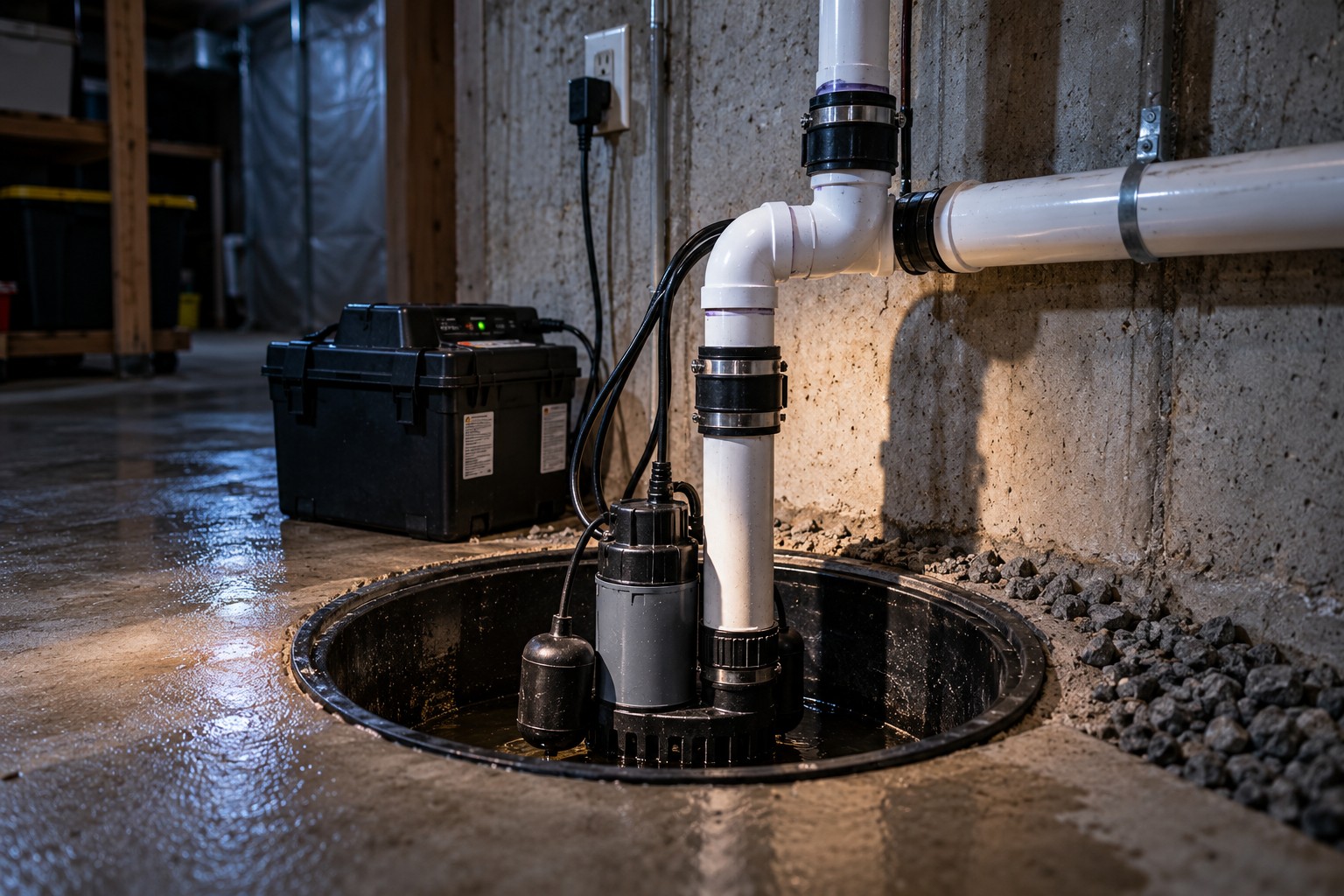
A 12-volt deep-cycle AGM battery loses capacity over a few years even sitting idle, so a backup that worked two seasons ago may not run the pump through the next outage. Testing the battery is a core part of a sump pump inspection, since the backup only matters if it works when the grid goes down.
An airtight sump pit lid with a gasket keeps crawl space humidity, debris, and radon in check while blocking the sediment that clogs pumps. A missing or cracked lid lets grit fall in and speeds up float and impeller failure, which is why the lid is checked during a thorough sump pump inspection.
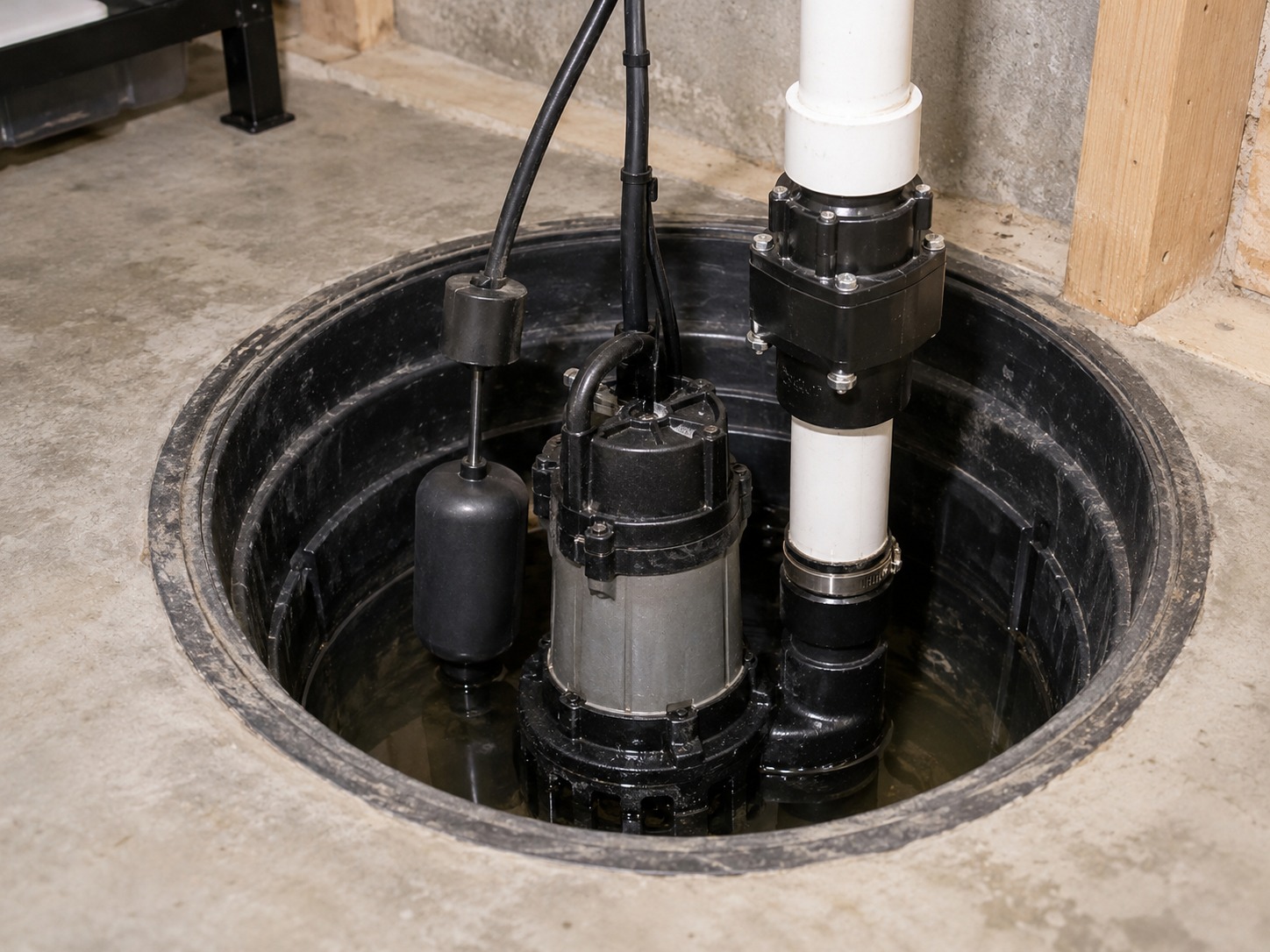
A thorough sump pump inspection is more than glancing at the pit. The plumber tests the pump under real conditions by filling the pit and confirming the pump switches on, moves water at the rate it should, and switches off cleanly. The float switch is checked for free movement and correct activation level. The check valve is examined to confirm it holds water in the discharge line rather than letting it fall back. The discharge path is traced from the pit to its exit point to confirm it is clear and routes away from the foundation. The pit itself is checked for sediment buildup that needs flushing. And on systems with a backup, the battery and secondary pump are tested. Each of these checks maps to a real failure mode seen in Boerne homes. A sump pump inspection that skips the discharge line or the battery is only half an inspection, because those are exactly the parts that fail quietly. The point is to leave knowing the entire system works end to end, not just that the pump hums when the float is lifted by hand. A complete inspection gives the homeowner a clear picture of what is solid and what needs attention before the next storm.
The float switch is the part that tells the pump when to run, and it is also one of the first parts to fail in gritty Hill Country pits. A vertical mechanical float can stiffen with sediment, a tethered float can snag on the pit wall or the pump, and an older switch can simply wear out. A sump pump inspection tests the float by raising the water level and watching the pump respond at the right point, then confirming it shuts off when the water drops. A float that sticks, hesitates, or activates at the wrong level is flagged for replacement before it strands the homeowner during a storm. This is a check a careful homeowner can partly do themselves between professional visits, by pouring a bucket of water into the pit and confirming the pump kicks on. But a sump pump inspection goes further, cleaning the sediment that causes most float problems and testing the switch the way a storm would. Pairing a professional inspection with the occasional self-test is the most reliable way to know the float will do its job when it counts.

A battery backup is only protection if the battery actually holds a charge, and batteries fade with age whether they are used or not. A 12-volt deep-cycle AGM battery typically holds strong for a few years, then loses capacity until one day it cannot run the backup pump through an outage. A sump pump inspection tests the battery's charge and the trickle charger that maintains it, and confirms the secondary pump runs on battery power. For a Boerne home that relies on the backup during the frequent storm-season outages, this check is as important as testing the main pump. Finding a weak backup battery during a sump pump inspection is a quiet win, because replacing it costs little and takes minutes on a dry day. Discovering a dead battery during a grid outage, with the main pump already stopped and the pit filling, is the opposite. The whole point of a backup is to work when everything else has failed, and only a test confirms it will.
The sump pit collects more than water. In Boerne, it collects fine limestone sediment, sand, and grit that settle out and build a layer at the bottom. That sediment is what packs around the pump, seizes floats, and gets drawn into the impeller. A sump pump inspection includes checking the sediment level and flushing the pit when it has built up, which is one of the most effective things that can be done to extend a pump's life in this soil. A clean pit lets the pump and float work the way they were designed to. An airtight sealed pit lid with a gasket also comes up during inspection, since it controls crawl space humidity and keeps debris and radon out of the pit. A missing or broken lid lets more sediment and junk fall in, which speeds up the clogging the inspection is trying to prevent. Confirming the lid seals properly is part of a complete inspection in a Hill Country crawl space.
A sump pump can fail silently, which is why a high-water alarm is such a useful addition. The alarm sounds when water in the pit rises above the level the pump should be holding, giving the homeowner warning while there is still time to act. A inspection tests the alarm and, for homes that have one, the Wi-Fi water sensor that sends a flood alert to a phone. For a homeowner who travels or has a second property in the Hill Country, that mobile alert can be the difference between a minor issue and a ruined home. Adding an alarm or a water sensor is a natural suggestion that comes out of a inspection, especially for a home that has flooded before or relies heavily on the pump. The inspection confirms what is there and points out the gaps, so the homeowner can decide what level of monitoring fits their risk and their budget. Knowledge of the system's weak points is the real product of a good inspection.
The best time for a inspection in Boerne is before storm season, in late winter ahead of spring storms and again in early autumn, since those are when Hill Country thunderstorms cluster. A home that has never had its pump inspected should start now rather than waiting for a season, since an untested pump of unknown age is the highest-risk kind. New homeowners who inherited a pump with the house are in this group, and a first inspection tells them exactly what they are working with. An annual inspection also pairs naturally with pit flushing and any small repairs the check turns up, so the whole system gets attention in one visit. Booking it on a calm day, on the homeowner's schedule, beats the alternative of an emergency call during a storm with every plumber in the county already busy. Gottfried Plumbing offers free sump evaluations and scheduled inspections across Boerne and Kendall County, so getting ahead of the next storm is simple.

A professional inspection is the backbone of storm readiness, but a homeowner can do useful checks between visits. The simplest is the bucket test, pouring several gallons of water into the pit and confirming the pump switches on, clears the water, and shuts off. Listening for unusual noise, watching that the pump does not cycle on and off rapidly, and glancing at the discharge point outside to confirm water actually comes out during a test all tell a homeowner whether the system is behaving. These quick checks between a formal inspection catch sudden problems early. A homeowner can also keep an eye on the pit for visible sediment buildup and make sure the lid sits properly, and check that the backup battery indicator, if the system has one, shows a healthy charge. None of this replaces the professional inspection that tests the parts a homeowner cannot easily reach, but it extends the protection between visits. The combination of an annual professional check and simple monthly self-checks is the most reliable way to avoid a storm-night surprise in the Boerne climate. Keeping a simple log of each test, noting the date and whether the pump ran cleanly, also helps a homeowner spot a slow decline over time, since a pump that takes a little longer to clear the pit each season is quietly telling its owner that a inspection is due.
The value of a inspection is that it turns up small issues while they are still small. A float that is starting to stick gets cleaned or replaced before it seizes during a storm. A check valve that is beginning to leak back gets swapped before it burns out the pump with constant cycling. A pit with a growing sediment layer gets flushed before the grit reaches the impeller. A backup battery down to half capacity gets replaced before it fails during an outage. Each of these is a minor, low-cost fix when caught during an inspection, and a major one when it fails on its own. This is the economics that makes a inspection worthwhile. The inspection itself is inexpensive, and the fixes it turns up are cheap when handled early and on a dry day. The alternative, a pump that fails silently and floods a crawl space, brings repair bills that dwarf a decade of inspections. For a Boerne home in Flash Flood Alley, treating the sump system as something to maintain rather than forget is the quiet discipline that keeps the water out year after year.
When a storm is coming or a pump has already failed, a Boerne homeowner can get the system tested before the rain. Gottfried Plumbing is a Texas State Board of Plumbing Examiners licensed, RMP-led plumbing contractor that installs, repairs, and tests sump pump systems built for Flash Flood Alley. The team handles submersible and pedestal pumps, battery backup systems, check valves, and discharge routing to code, with 24-hour storm dispatch, free sump evaluations, and upfront quotes. For a sump pump repair, a new install, or a pre-storm inspection, call Gottfried Plumbing at (830) 331-2055 or visit gottfriedplumbing.com/services/sump-pump-services.
Redirect to:
|
This page is a redirect. The following categories are used to track and monitor this redirect:
|
The biggest risk on a property that sits empty is a leak or burst pipe that runs for days before anyone notices. The practical answers are knowing where the main shutoff is and using it when away, setting the water heater to a vacation setting, and considering a leak-detection shutoff valve that cuts the water automatically. On a Waring well, a running leak also wears out the pump, so protection matters even more.
Waring has no municipal water or sewer, so nearly every property runs on a private well and a septic system. The groundwater comes from the Trinity Aquifer and tends to be hard, which is why many homes add a water softener and filtration after a water test. There is no treatment upstream, so whatever the well delivers is what the plumbing lives with.
Insulate the well equipment and any exposed lines, add heat tape where it helps, and either leave minimal heat on in the house or drain the system before a hard freeze if the place will be closed. An empty home has no one to drip faucets or catch a burst pipe, so a line that freezes can run until the next visit. Winterizing ahead of a cold stretch is far cheaper than the repair afterward.