Of every system that protects a Connecticut building, the fire alarm is the one that protects lives, and it is the one the law watches most closely. A camera documents what happened after the fact; a fire alarm changes what happens, getting people out and responders in before a fire spreads. It is also the system a business can least afford to get wrong, because the one time it matters, there is no second chance. Mammoth Security Inc. designs, installs, and monitors commercial fire alarm systems across Connecticut and Massachusetts, with fire protection as its first service, from its New Haven office and additional locations including New Britain.
Commercial fire alarm systems are networks of detection devices, notification devices, and a control panel that together sense a fire, alert the building, and signal for help. In a Connecticut commercial building, that system has to meet NFPA standards, the National Fire Protection Association codes that govern fire alarm design, installation, inspection, and testing, and satisfy the local fire marshal who enforces the Connecticut State Fire Safety Code. A fire alarm is not a place to improvise; it is a code-driven system that has to be designed and installed correctly by people who know the rules.

Fire alarm systems come in two architectures, and the right one depends on the building. A conventional system divides a building into zones and tells responders which zone triggered, which suits a smaller building. An addressable system gives every device its own identity, so the panel reports exactly which detector or pull station triggered and where, letting responders go straight to the source rather than searching a zone. For a larger Connecticut property, a multi-story building, an apartment community, an office complex, or an industrial facility, the precision of an addressable system saves the minutes that matter most in a fire. Mammoth Security designs the architecture to the building rather than defaulting to one.
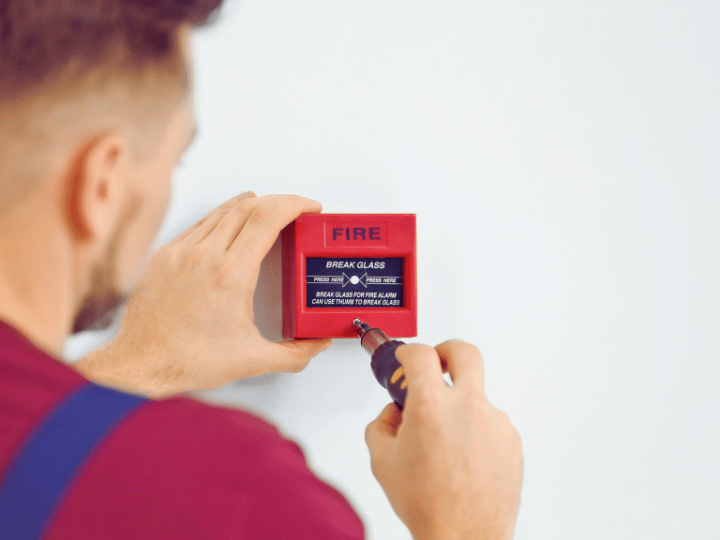
The devices that make up the system each do a job. Smoke detectors sense smoke, heat detectors respond to temperature for spaces where smoke detectors would false-alarm, such as kitchens and garages, and flame detectors watch high-hazard areas. Manual pull stations let a person trigger the alarm directly. Horn-strobe notification devices alert occupants with sound and light, so the warning reaches everyone, including those who cannot hear it. Duct detectors sense smoke in a building's air handling and can shut it down to stop smoke from spreading. Mammoth Security specifies the right mix for each Connecticut space, because a commercial kitchen needs a different detection plan than an office floor.
An addressable fire alarm gives every detector and pull station its own identity, so the panel reports exactly which device triggered and where, letting Connecticut responders go straight to the source instead of searching a whole zone.
NFPA standards require ongoing inspection and testing of a fire alarm, because detectors drift and batteries age, so a system that is never tested is one that may not sound when it must, which is why a standing service relationship matters.
Spaces like commercial kitchens and garages use heat detectors rather than smoke detectors, because they respond to temperature and avoid the false alarms that smoke and cooking vapor would trigger, part of matching detection to each space.
A fire alarm that only sounds on site depends on someone being there to hear it and call for help. A monitored fire alarm does not. Paired with 24/7 central station monitoring, a Connecticut fire alarm signals a monitoring center the instant it triggers, and the center notifies the fire department immediately, day or night, whether or not anyone is in the building. For a business that closes overnight, an office after hours, a warehouse on a weekend, an apartment building while residents sleep, that monitored response covers the hours when a fire is most dangerous and least likely to be noticed. Mammoth Security monitors fire alarms around the clock, backed by a 24/7 answering service and emergency response.
Monitoring also carries a compliance and insurance dimension. Many Connecticut properties are required to monitor their fire systems, and insurers price monitored buildings differently from unmonitored ones. A professionally installed, monitored, code-compliant fire alarm is both a life-safety system and a business asset, and the documentation a monitored system produces supports inspections and insurance alike.

A fire alarm that cries wolf is a real problem, not a minor annoyance. Repeated false alarms drain a fire department's resources, erode a building's credibility, and in many Connecticut cities bring fines. New Haven, for example, runs a False Alarm Reduction program through its police department, and other municipalities enforce their own ordinances. Good design prevents false trips: placing heat detectors rather than smoke detectors in kitchens and dusty spaces, positioning devices away from vents and steam, and using addressable panels that pinpoint a fault rather than a whole zone. Mammoth Security designs a fire alarm to sound when there is a fire and stay quiet when there is not, because a system trusted to be right is a system people act on.
A fire alarm system is not finished at installation; NFPA standards require ongoing inspection and testing to keep it working and keep the building compliant. Detectors drift, batteries age, and devices fail, and a system that is not tested is a system that may not sound when it must. Mammoth Security's in-house W-2 technicians handle the installation and the ongoing service, so a Connecticut building has one team responsible for keeping the fire alarm code-compliant year after year rather than a distant installer who disappeared after the job. That standing relationship matters for a system the fire marshal will inspect for the life of the building.
Bringing an older system up to code is part of that work. Many Connecticut buildings run fire alarm systems installed years or decades ago, and codes change while equipment ages. A system that satisfied the fire marshal when it went in may no longer meet current NFPA standards, and a failed inspection can halt a business or a sale. Mammoth Security evaluates existing systems, identifies where they fall short, and brings them up to code, whether that means adding devices, replacing an obsolete panel, or upgrading to an addressable system.

Fire protection works best as part of an integrated building system rather than a standalone install. Tied to the access control, a fire alarm can release magnetic locks so occupants evacuate freely and elevators recall to a safe floor. Tied to the cameras and monitoring, an alarm event brings up the relevant part of the building for a monitoring operator. When one integrator handles the fire alarm alongside the cameras, access control, and burglar alarms, the whole system works together and one company answers for all of it, rather than a patchwork of vendors pointing at each other when something fails. Mammoth Security delivers that single-source accountability.
Fire code is enforced locally, so a Connecticut fire alarm has to satisfy the specific town's fire marshal, and a contractor that works those towns knows the local requirements and inspection process. Mammoth Security is a licensed Connecticut security and low-voltage contractor with four locations and more than 5,000 buildings secured, and fire protection is its first service, not a sideline. Its in-house W-2 technicians design, install, monitor, and maintain fire alarm systems across Connecticut and Massachusetts, close enough for a fast response on a system where response time is the whole point.
Different Connecticut buildings need different fire designs. A restaurant runs a commercial kitchen, one of the more demanding fire environments a small business operates, needing heat detection tuned to the space and coordination with the kitchen's suppression system. An apartment community needs detection and notification across every unit and common space, with an addressable panel that tells responders exactly which unit triggered, because the building is full of residents who may be asleep. An office or medical building needs coverage across floors and a plan that satisfies the fire marshal's occupancy requirements. An industrial facility may need flame detectors and duct detection for its air handling. A warehouse needs coverage sized to a large, open volume. Mammoth Security matches the fire alarm design to the building's real hazards rather than applying one template to every property, which is what separates a life-safety system that performs from one that merely passes a first inspection.
At the center of every fire alarm is the control panel, the device that gathers signals from the detectors and pull stations, sounds the notification devices, and communicates with the outside world. In a monitored system, the panel signals the central monitoring station the instant an alarm triggers, and the station notifies the fire department without waiting for a person on site. That communication link is what turns a local alarm into a monitored one, and it is why the panel and the connection have to be installed and tested correctly. A break in that link, an unmonitored panel, or an untested connection is a silent failure that surfaces only in an emergency. Mammoth Security installs, monitors, and tests the whole chain, from the detector to the panel to the monitoring center, so the system works end to end when it must.
For a Connecticut or Massachusetts business that needs a fire alarm designed, installed, monitored, or brought up to code, the starting point is a free on-site assessment. To plan commercial fire alarm systems for your building, contact Mammoth Security Inc. at (860) 532-6714 for a no-obligation written quote.
Redirect to:
|
This page is a redirect. The following categories are used to track and monitor this redirect:
|